
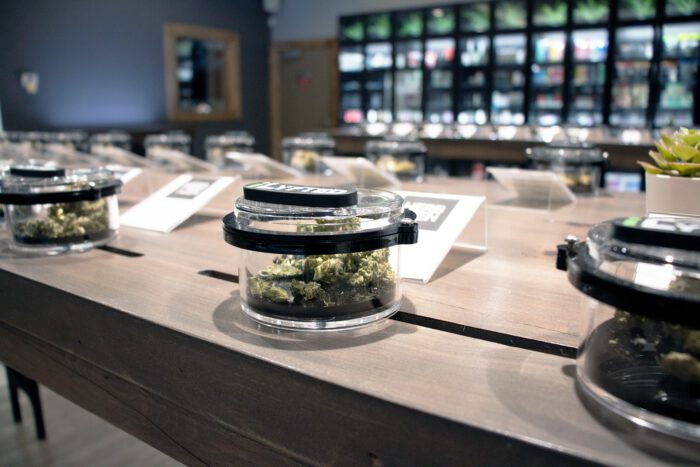
Whether you are in the planning stages of designing and opening your cannabis store or remodeling your store layout, your cannabis retail displays and overall sales floor model play a critical role in how customers experience your store. The right combination of layout and retail cannabis store displays and fixtures can directly impact customer flow, product visibility, and overall sales performance.
There are many ways to set up your cannabis store sales model. Your dispensary display and design should reflect how you want customers to move through your space and interact with your products.
Things you should consider when deciding on a sales floor model include:
- Customer experience
- Staffing
- Training
- Profit margin
- Existing store fixtures
- Floor plan
- and your overall brand
These are the types of sales models that most dispensaries use.
1. Traditional Sales Counter
In this model, customers check in at the reception area and browse the store for products. Usually, customers peruse the dispensary displays and design when they’re on the sales floor and may also look at digital menus for pricing.
Once they make their selections, they go up to the counter to buy the products, which are kept behind the counter or in display cases at the sales counter. Sales are rung up, and the customer goes home to enjoy their cannabis purchases.
This setup keeps products secure while still allowing customers to explore your cannabis retail displays from a distance.
Pros:
- Security compliance
- Lower staffing costs
- Reduced theft
- Works well in dispensaries with small floor plans
Cons:
- Customer flow can bottleneck during busy hours
- Potentially unsatisfying customer experience if wait times are lengthy
- Tough to speed up the checkout process
- Budtenders may feel pressure to offer less customer education during peak hours
2. Self Service with Budtender Assistance (Open Floor Model)
This model has most of the products displayed on the sales floor secured through retail cannabis store displays and fixtures, allowing customers to browse at their own pace, bringing them to the sales counter when they are ready to make their final purchase. Budtenders can come out to the sales floor to answer questions or make recommendations.
Strong cannabis retail displays and fixtures are essential here, as they must balance accessibility with compliance and security.
Pros:
- More similar to a traditional retail store experience
- Staffing needs are still low compared to other models
- More intuitive customer experience with more potential impulse purchases
- Customer flow can be faster, as experienced shoppers can find what they need quickly
Cons:
- Product samples must be secured according to regional compliance regulations
- Budtenders must be well-trained to manage customers and answer questions
- Product loss is potentially higher, so security systems should be in place.
3. Floating Budtenders (Apple Store Style)
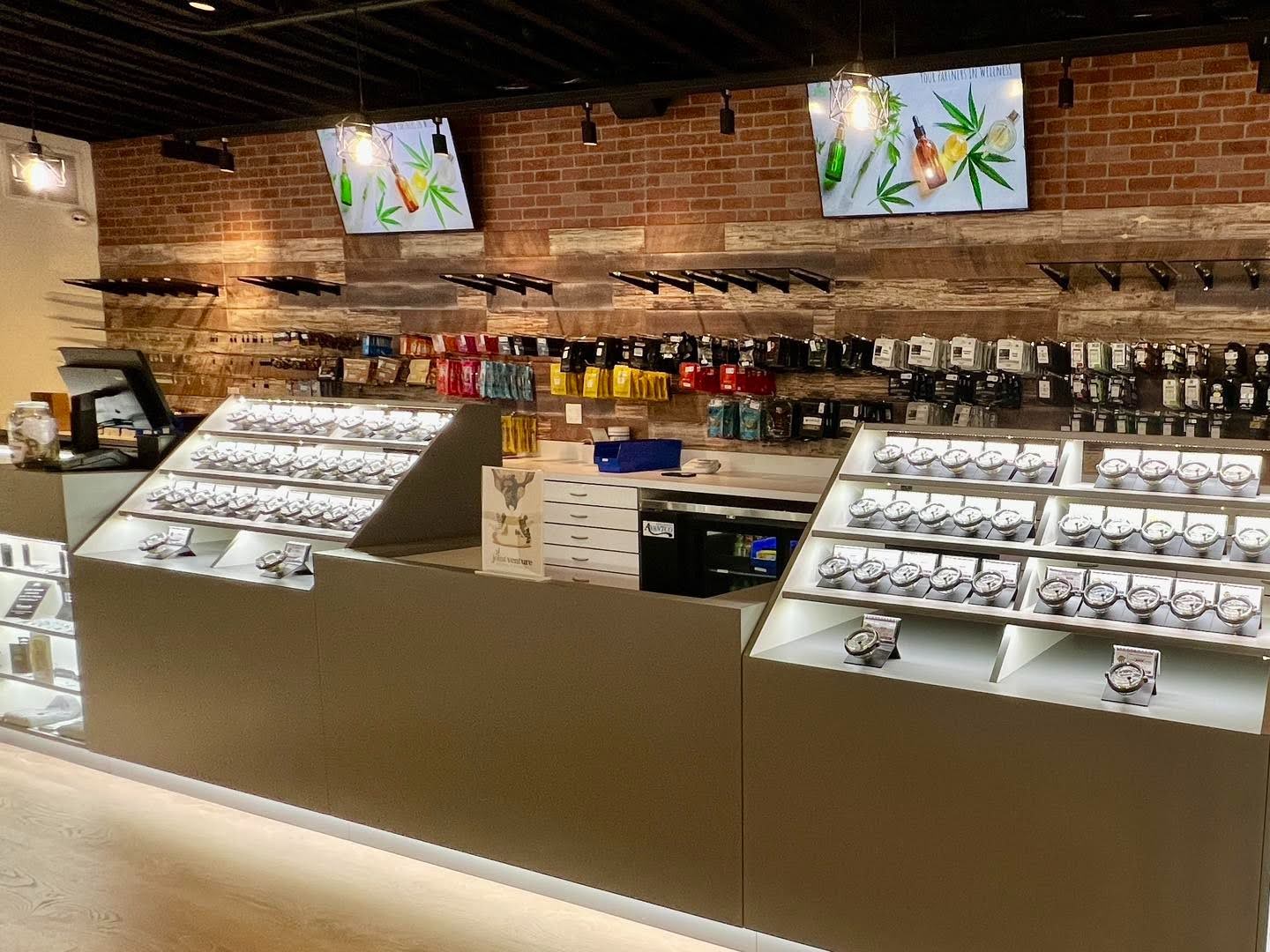
Customers check in and browse the dispensary floor and cannabis retail displays. Product samples are displayed on the sales floor. Budtenders come to customers with iPads or tablets to take their order. Customer orders are packed in the back, and finished orders are brought to the customer.
This model relies heavily on well-placed dispensary displays and designs to guide customer exploration while budtenders handle the transaction process.
Pros:
- More personalized customer service
- Ordering is quick and efficient
- Works well for dispensaries with high traffic
- Customer wait times are greatly reduced
Cons:
- Customers may have fewer opportunities to interact with products like flowers on the sales floor prior to purchase
- Budtender must be thoroughly trained to make this sales model work
4. Self-Serve Kiosks
Customers can browse retail cannabis store displays and fixtures. Self-serve kiosks with tablets for ordering are available, so they can place orders and pay. The orders are packed in the back, and customers can pick up the order at the customer sales counter.
In this setup, cannabis retail displays should work alongside digital systems to highlight key products and guide purchase decisions before checkout.
Pros:
- Lower staff costs, one budtender can manage several kiosks
- Shorter customer wait times
- Efficient order and checkout process if customers are tech-savvy
Cons:
- Customers may still need help
- Kiosk tablets will need maintenance and occasional replacement
- Instructions, menus, and the user interface must all be crystal clear
5. Hybrid - In-Store Service Plus Delivery
A cannabis store may operate as both a retail location and a distribution hub, fulfilling in-store purchases while also processing delivery orders.
This approach requires thoughtful dispensary displays and designs that support both in-store browsing and efficient backend fulfillment.
Pros:
- Potential for more orders
- Increased customer base
- Flexibility to handle more orders and different types of customers
Cons:
- Only available in some states or regions where regulations allow delivery
- Increased complexity for managing order workflow and fulfillment
- More staffing is required
- Increased competition within a region for delivery orders
Bud Bar Displays: The Way Cannabis is Sold
Since the beginning of cannabis retail, Bud Bar Displays has been an industry leader and innovator in cannabis product displays. No matter what type of layout or sales model you have for your dispensary, Bud Bar Displays will always make your cannabis products stand out. The right combination of cannabis retail displays and fixtures can elevate your store and improve how customers interact with your products.
We’re committed to showcasing your cannabis products in the most professional, interactive way possible, while maintaining compliance with all regulations.
For more information or to talk with one of our sales representatives, contact us or call 916-858-2000 during business hours. We’d love to help your cannabis store create a more effective retail experience.